


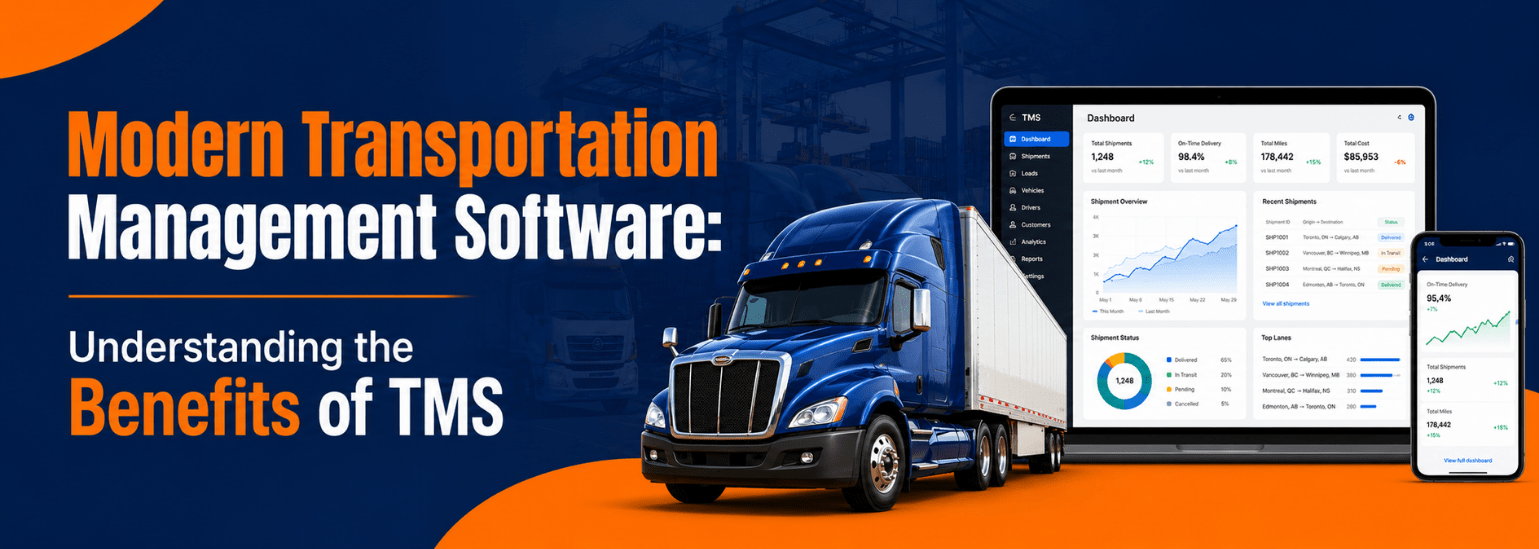
Modern Transportation Management Software: Understanding the Benefits of TMS
- June 11, 2026
- AVAAL Technology Solutions
Transportation is one of the most critical components of the supply chain. Whether goods are moving across cities, provinces, or international borders, businesses depend on efficient transportation operations to meet customer expectations and maintain profitability. As supply chains become more complex and customer demands continue to increase, managing transportation through manual processes is becoming increasingly difficult.
Organizations today face numerous transportation challenges, including rising fuel costs, limited visibility into shipments, fluctuating carrier rates, compliance requirements, and increasing pressure to deliver goods faster. These challenges can impact operational efficiency, customer satisfaction, and overall business performance when not managed effectively.
Modern Transportation Management Software (TMS) has emerged as a powerful solution for addressing these issues. By automating transportation processes, improving visibility, and providing data-driven insights, a transportation management system helps organizations gain greater control over their logistics operations. Businesses across various industries are increasingly investing in transportation management software to optimize freight movement, reduce costs, and improve service levels.
What Is Transportation Management Software?
Transportation Management Software is a technology platform designed to help businesses plan, execute, monitor, and optimize the movement of goods throughout the supply chain. It serves as a centralized system for managing transportation activities, including shipment planning, carrier selection, route optimization, freight tracking, and performance analysis.
A transportation management system enables organizations to replace manual processes with automated workflows. Instead of relying on spreadsheets, phone calls, emails, and disconnected systems, transportation teams can manage operations through a single platform that provides real-time visibility and actionable insights.
Modern TMS solutions support organizations of various sizes, from small transportation providers to large enterprises managing complex logistics networks. As transportation demands continue to evolve, these systems provide the flexibility needed to adapt to changing business requirements.
Why Transportation Management Is Becoming More Complex
The logistics landscape has changed significantly over the past decade. Customer expectations have increased, transportation networks have expanded, and supply chains have become more interconnected than ever before.
Businesses are now expected to provide accurate delivery estimates, real-time shipment updates, and faster fulfillment times. At the same time, transportation managers must control costs, manage carrier relationships, address regulatory requirements, and respond to unexpected disruptions.
Without the right technology, managing these responsibilities can become overwhelming. Manual processes often lead to inefficiencies, communication gaps, delayed decision-making, and increased operational expenses.
Transportation management software helps businesses overcome these challenges by creating a more connected, automated, and data-driven transportation environment.
Key Benefits of Modern Transportation Management Software
Improved Transportation Visibility
One of the most valuable benefits of a transportation management system is enhanced visibility across transportation operations. Businesses need access to accurate information regarding shipment locations, delivery status, carrier performance, and potential disruptions.
Modern transportation management software provides real-time tracking and monitoring capabilities that allow organizations to view shipment progress throughout the transportation lifecycle. This visibility helps teams identify issues early and take corrective action before problems affect customers.
Improved transparency also strengthens communication between shippers, carriers, customers, and internal stakeholders, resulting in better coordination across the supply chain.
Reduced Transportation Costs
Transportation expenses often represent a significant portion of supply chain spending. Managing these costs effectively is essential for maintaining profitability and competitiveness.
Transportation management software helps organizations reduce costs through route optimization, carrier comparison, shipment consolidation, and automated freight auditing. Businesses can identify inefficiencies, negotiate better carrier agreements, and make more informed transportation decisions based on real-time data.
By optimizing transportation activities, companies can lower operational expenses while maintaining or improving service quality.
Enhanced Operational Efficiency
Manual transportation processes consume considerable time and resources. Tasks such as load planning, carrier selection, shipment scheduling, and reporting often require extensive administrative effort.
A transportation management system automates many of these routine activities. TMS reduces manual workloads, minimizes human errors, and accelerates transportation operations.
As a result, logistics teams can focus on strategic initiatives rather than repetitive administrative tasks. Increased efficiency leads to faster decision-making and improved productivity throughout the organization.
Better Carrier Management
Carrier relationships play a critical role in transportation success. Managing multiple carriers can become challenging when performance data is scattered across different systems or maintained manually.
Transportation management software centralizes carrier information and performance metrics in a single platform. Businesses can evaluate carrier reliability, transit times, costs, and service quality using accurate data.
This information supports better carrier selection decisions and helps organizations build stronger transportation partnerships.
Route Optimization and Delivery Performance
Smarter Route Planning
Route planning directly affects transportation costs, fuel consumption, delivery speed, and customer satisfaction. Poor route selection can result in delays, increased expenses, and inefficient resource utilization.
Modern transportation management software uses advanced algorithms to determine optimal routes based on factors such as distance, traffic conditions, delivery schedules, vehicle capacity, and transportation costs.
Optimized routing helps organizations improve delivery performance while reducing fuel consumption and transportation expenses.
Increased On-Time Deliveries
Customers increasingly expect reliable delivery timelines and accurate shipment updates. Delayed deliveries can negatively impact customer satisfaction and brand reputation.
A transportation management system helps businesses improve delivery reliability by providing better planning, monitoring, and communication tools. Real-time tracking and proactive alerts enable transportation teams to address potential delays before they affect customers.
Improved delivery performance strengthens customer relationships and contributes to long-term business success.
Data-Driven Decision Making
Access to Real-Time Analytics
Data is becoming one of the most valuable assets in transportation management. Organizations that can effectively analyze transportation performance are better positioned to identify opportunities for improvement.
Transportation management software provides access to dashboards, reports, and analytics that help decision-makers understand key performance indicators. These insights can include transportation costs, carrier performance, delivery rates, transit times, and operational efficiency metrics.
Access to accurate data allows businesses to make informed decisions that support continuous improvement and cost reduction initiatives.
Performance Measurement and Continuous Improvement
Continuous improvement requires visibility into operational performance. Transportation management systems provide detailed reporting tools that help organizations evaluate transportation strategies and identify areas for optimization.
By measuring performance consistently, businesses can develop more effective transportation processes and improve overall supply chain efficiency.
Strengthening Supply Chain Visibility
Supply chain visibility has become a major priority for organizations operating in competitive markets. Businesses need accurate information about inventory movement, shipment status, and transportation performance to make timely decisions.
Transportation management software acts as a central hub for transportation data, enabling stakeholders to access information from a single source. Improved visibility helps organizations respond more effectively to disruptions, delays, and changing customer requirements.
Greater transparency across the supply chain also supports collaboration between suppliers, carriers, logistics providers, and customers.
The Role of Automation in Transportation Management
Automation is transforming logistics operations by reducing manual effort and increasing consistency. Transportation management systems automate many processes that traditionally required significant administrative involvement.
Shipment scheduling, carrier assignment, invoice verification, status updates, and reporting can all be automated through a modern TMS platform. These capabilities reduce operational complexity while improving accuracy and efficiency.
Automation also supports scalability. As transportation volumes increase, businesses can manage higher workloads without proportionally increasing administrative resources.
Integration with Existing Business Systems
Transportation operations are closely connected to other business functions, including inventory management, warehousing, customer service, and financial management.
Modern transportation management software can integrate with Enterprise Resource Planning systems, Warehouse Management Systems, accounting platforms, and customer relationship management solutions. These integrations create a unified flow of information across the organization.
Connected systems reduce data silos, improve operational visibility, and enable more efficient business processes. Integration also helps ensure data accuracy by eliminating duplicate data entry and manual information transfers.
Future Trends in Transportation Management Software
Transportation technology continues to evolve rapidly. Emerging innovations are creating new opportunities for businesses to improve efficiency and gain competitive advantages.
Artificial intelligence is enhancing route optimization, demand forecasting, and predictive analytics capabilities. Machine learning technologies are helping organizations identify transportation patterns and improve decision-making accuracy.
Internet of Things devices are providing greater shipment visibility through real-time asset tracking and monitoring. Sustainability initiatives are also driving interest in transportation solutions that reduce fuel consumption and support environmentally responsible operations.
As these technologies continue to mature, transportation management software will become even more valuable for organizations seeking operational excellence.
AVAAL: Your Transportation Management Software Partner
Selecting the right technology partner is just as important as choosing the right software solution. A successful transportation management system requires both technical expertise and a deep understanding of logistics operations.
AVAAL has extensive experience delivering transportation technology solutions that help carriers, brokers, and logistics providers improve efficiency and gain greater visibility into their operations. By combining industry knowledge with innovative software capabilities, AVAAL helps organizations implement transportation management solutions that align with their unique business goals.
Whether businesses are modernizing existing transportation processes or seeking a scalable TMS platform to support future growth, AVAAL provides the expertise needed to navigate complex logistics challenges and drive long-term success. Book your demo today!
Conclusion
Modern transportation management software has become an essential tool for businesses seeking to improve efficiency, reduce costs, and strengthen supply chain performance. As transportation networks become more complex and customer expectations continue to rise, organizations need technology that provides visibility, automation, and actionable insights.
A transportation management system helps businesses streamline operations, optimize freight movement, improve carrier management, and make data-driven decisions. These capabilities contribute to better service levels, increased operational efficiency, and stronger financial performance.
Organizations that invest in modern TMS technology position themselves to adapt more effectively to changing market conditions and future logistics challenges. As transportation continues to play a central role in supply chain success, transportation management software will remain a critical driver of growth, efficiency, and competitive advantage.
- August 24, 2026
- August 21, 2026

- July 21, 2026

- December 15, 2025


- December 19, 2024


- May 10, 2024
