


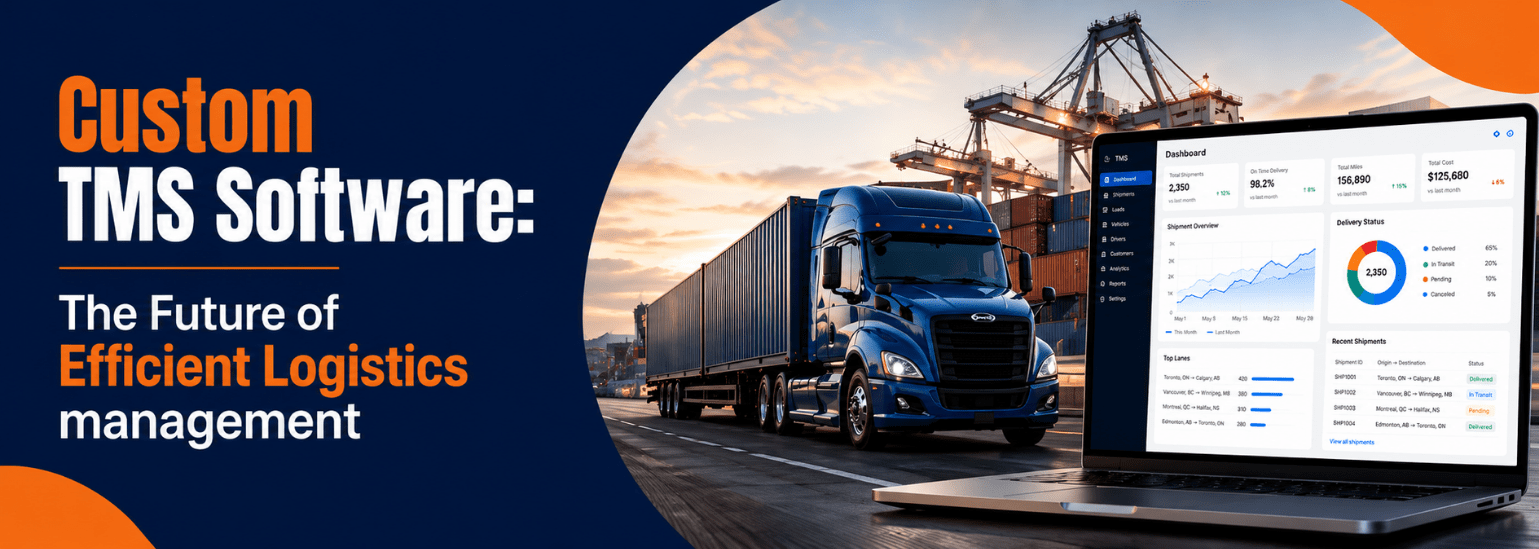
Custom TMS Software: The Future of Efficient Logistics Management
- June 11, 2026
- AVAAL Technology Solutions
The logistics industry is evolving at an unprecedented pace. Growing customer expectations, complex supply chains, rising transportation costs, and increasing demand for real-time visibility are forcing businesses to rethink how they manage freight and transportation operations. Traditional logistics processes and generic software solutions often struggle to keep up with these challenges, creating inefficiencies that directly impact profitability and customer satisfaction.
This is where custom TMS software is becoming a game changer. A Transportation Management System (TMS) helps businesses plan, execute, monitor, and optimize the movement of goods. While off-the-shelf solutions offer standard functionality, many organizations are discovering that custom-built transportation management systems provide the flexibility and scalability needed to address their unique operational requirements.
As logistics networks become more interconnected and data-driven, custom TMS software is emerging as a critical technology investment. It enables organizations to streamline workflows, improve decision-making, reduce costs, and gain a competitive advantage in an increasingly demanding marketplace.
Understanding Custom TMS Software
A Transportation Management System is a software platform to manage freight movement, carrier operations, shipment planning, route optimization, and logistics performance. It serves as the central hub for transportation activities across the supply chain.
Custom TMS software goes beyond standard functionality by being specifically designed around a company’s operational processes, business goals, customer requirements, and industry challenges. Instead of forcing organizations to adapt their workflows to fit predefined software limitations, a customized solution adapts to the business itself.
Every logistics operation is unique. Some companies manage multi-modal transportation networks, while others focus on specialized freight handling, regional distribution, or complex international shipping. Custom transportation management software accommodates these distinct requirements, ensuring a better fit between technology and business operations.
Why Traditional TMS Solutions Often Fall Short
Many businesses initially invest in ready-made transportation management systems because they offer quick deployment and standardized features. While these solutions can provide value, they frequently encounter limitations as operations grow more sophisticated.
Generic platforms are designed to serve a broad market. As a result, they often include unnecessary features while lacking the specific capabilities certain organizations require. Businesses may find themselves relying on manual workarounds, disconnected systems, or expensive third-party integrations to fill functionality gaps.
These limitations can create operational inefficiencies, reduce visibility, and increase administrative overhead. Over time, companies may realize they are paying for software that only partially supports their transportation strategy.
Custom TMS software addresses these issues by aligning technology directly with operational objectives. Instead of compromising on functionality, businesses gain a system that supports their processes from day one.
The Growing Demand for Transportation Management Software
The transportation and logistics sector is experiencing significant digital transformation. Supply chains are becoming more dynamic, customer expectations continue to rise, and disruptions can occur with little warning. Businesses need technology that enables agility and rapid response.
Transportation management software has become essential for organizations seeking greater control over freight operations. Companies are increasingly looking for solutions that offer real-time shipment tracking, automated workflows, advanced analytics, and seamless integration with enterprise systems.
As transportation volumes increase and logistics networks become more complex, custom TMS software provides the adaptability needed to support long-term growth. Organizations can continuously refine processes without being constrained by software limitations.
Key Benefits of Custom TMS Software
Enhanced Operational Efficiency
Efficiency is one of the primary reasons businesses invest in transportation management systems. Manual processes often involve repetitive tasks, paperwork, data entry, and communication delays that consume valuable resources.
Custom TMS software automates many of these activities, including shipment planning, carrier selection, load optimization, invoicing, and reporting. Automation reduces human error while allowing logistics teams to focus on strategic activities that create greater business value.
By eliminating unnecessary manual work, organizations can accelerate transportation operations and improve overall productivity.
Improved Supply Chain Visibility
Visibility has become a critical requirement in modern logistics. Customers, suppliers, and internal stakeholders all expect accurate and timely information about shipments.
A custom transportation management system can provide real-time tracking and monitoring across the entire transportation lifecycle. Businesses gain access to shipment status updates, carrier performance metrics, delivery timelines, and exception alerts from a centralized platform.
Improved visibility helps organizations identify issues before they escalate, enabling proactive decision-making and stronger customer service.
Better Cost Management
Transportation expenses often represent a significant portion of supply chain costs. Without proper management tools, businesses may struggle to identify inefficiencies or opportunities for savings.
Custom TMS software enables organizations to analyze transportation spending, compare carrier rates, optimize routes, consolidate shipments, and reduce unnecessary costs. Detailed reporting capabilities provide valuable insights into operational performance and financial efficiency.
Over time, these improvements can generate substantial cost savings while improving transportation reliability.
Read More – How Transportation Management Software Reduces Empty Miles and Fuel Costs
Scalability for Future Growth
Business growth introduces new challenges, including increased shipment volumes, expanded carrier networks, additional warehouses, and new customer requirements.
A custom transportation management system can scale alongside organizational growth. New features, workflows, integrations, and operational capabilities can be added as business needs evolve.
This flexibility ensures that the technology investment continues delivering value over the long term without requiring a complete system replacement.
Essential Features of Custom TMS Software
Intelligent Route Optimization
Route planning directly impacts transportation costs, delivery performance, and resource utilization. Custom TMS software can incorporate advanced routing algorithms that consider factors such as traffic conditions, delivery schedules, fuel costs, and vehicle capacity.
Optimized routes reduce transit times and improve overall operational efficiency while lowering transportation expenses.
Carrier Management
Managing multiple carriers can become complex without centralized oversight. A custom transportation management system provides a unified platform for carrier onboarding, performance evaluation, rate management, and communication.
Organizations can compare carrier performance using real-time data, ensuring they consistently select the most effective transportation partners.
Freight Audit and Payment Automation
Manual freight auditing often consumes considerable administrative effort and increases the risk of billing errors.
Custom TMS software can automatically validate invoices against contracted rates, shipment records, and delivery confirmations. This automation accelerates payment processes while improving financial accuracy.
Real-Time Analytics and Reporting
Data-driven decision-making is becoming increasingly important in logistics management. Custom transportation management software provides dashboards and reports tailored to specific business objectives.
Decision-makers gain access to meaningful performance indicators such as transportation costs, carrier utilization, delivery success rates, transit times, and operational efficiency metrics.
These insights support continuous improvement initiatives and strategic planning.
The Role of Automation in Modern Logistics
Automation is reshaping the logistics industry. Organizations that continue relying heavily on manual processes may struggle to remain competitive in an increasingly digital environment.
Custom TMS software acts as a foundation for logistics automation by connecting transportation workflows, business systems, and operational data. Automated shipment scheduling, carrier assignments, exception management, and reporting significantly reduce administrative burdens.
Automation also improves consistency across operations. Standardized workflows ensure that transportation processes are executed accurately regardless of shipment volume or operational complexity.
As businesses continue embracing digital transformation, automation capabilities will become even more valuable in achieving operational excellence.
Integration Capabilities That Drive Business Value
One of the most significant advantages of custom TMS software is its ability to integrate seamlessly with existing business systems.
Logistics operations rarely function in isolation. Transportation activities often interact with Enterprise Resource Planning systems, Warehouse Management Systems, customer relationship platforms, accounting software, and inventory management tools.
Custom-built transportation management systems can establish smooth data flows between these platforms, eliminating information silos and reducing duplicate data entry. Integrated operations improve accuracy, enhance visibility, and support better decision-making across the organization.
The result is a more connected and efficient supply chain ecosystem.
How Custom TMS Software Supports Customer Satisfaction
Customer expectations have changed dramatically over the past decade. Businesses are now expected to provide accurate delivery estimates, proactive communication, and real-time shipment updates.
A custom transportation management system helps organizations meet these expectations through enhanced visibility and communication capabilities. Customers gain access to shipment tracking information, status notifications, and delivery updates throughout the transportation process.
Improved transportation performance directly contributes to customer satisfaction by reducing delays, increasing reliability, and creating a more transparent experience.
Organizations that consistently deliver positive customer experiences are better positioned to build long-term relationships and strengthen brand loyalty.
Industries Benefiting from Custom Transportation Management Software
The advantages of custom TMS software extend across numerous industries. Different sectors face unique transportation challenges that often require specialized functionality.
Manufacturing companies use transportation management systems to coordinate inbound materials and outbound finished goods. Retail organizations rely on TMS solutions to manage complex distribution networks and support omnichannel fulfillment strategies.
Third-party logistics providers benefit from customized workflows that accommodate diverse customer requirements. Food and beverage companies use transportation software to manage time-sensitive deliveries and maintain product quality.
Healthcare organizations depend on reliable transportation systems to ensure the timely delivery of critical medical supplies and equipment.
Each industry gains value from technology that aligns with its specific operational demands.
Future Trends Shaping Custom TMS Software
The future of logistics technology will be heavily influenced by innovation and data intelligence. Organizations seeking long-term competitiveness should pay close attention to emerging trends in transportation management.
Artificial intelligence is enabling more accurate forecasting, route optimization, and predictive analytics. Machine learning algorithms can identify patterns that support better operational decisions.
Internet of Things devices are improving shipment visibility by providing real-time tracking data from vehicles, containers, and assets. Advanced analytics platforms are delivering deeper insights into transportation performance.
Sustainability initiatives are also driving demand for transportation solutions that reduce fuel consumption and carbon emissions. Custom TMS software can help organizations monitor environmental impact while supporting greener logistics strategies.
As these technologies mature, customized transportation management platforms will become even more powerful tools for supply chain optimization.
AVAAL: Your Custom TMS Development Partner
Choosing the right development partner is essential for building a transportation management system that delivers long-term value. With extensive experience in logistics technology and transportation operations, AVAAL develops custom TMS software tailored to the unique needs of carriers, brokers, shippers, and logistics providers.
AVAAL combines industry expertise with advanced software development capabilities to create scalable, secure, and efficient transportation management solutions. From workflow automation and real-time visibility to system integration and performance analytics, We help businesses streamline logistics operations, reduce costs, and adapt to evolving supply chain demands with confidence.
Whether you are looking to modernize existing transportation processes or develop a fully customized transportation management system from the ground up, Avaal can help. Contact our team today to discuss your logistics challenges and discover how a custom TMS solution can drive greater efficiency, visibility, and growth for your business.
Conclusion
The logistics industry is entering a new era where efficiency, visibility, and agility are essential for success. Businesses can no longer rely solely on manual processes or generic software solutions to manage increasingly complex transportation networks.
Custom TMS software provides the flexibility, scalability, and intelligence needed to optimize transportation operations and support long-term growth. By aligning technology with unique business requirements, organizations can streamline workflows, reduce costs, improve customer satisfaction, and gain deeper operational insights.
As digital transformation continues reshaping supply chains worldwide, custom transportation management systems will play an increasingly important role in helping businesses remain competitive. Companies that invest in tailored logistics technology today will be better prepared to navigate future challenges and capitalize on emerging opportunities in the rapidly evolving world of logistics.

- August 24, 2026

- August 21, 2026

- July 21, 2026

- December 15, 2025


- December 19, 2024


- May 10, 2024
