



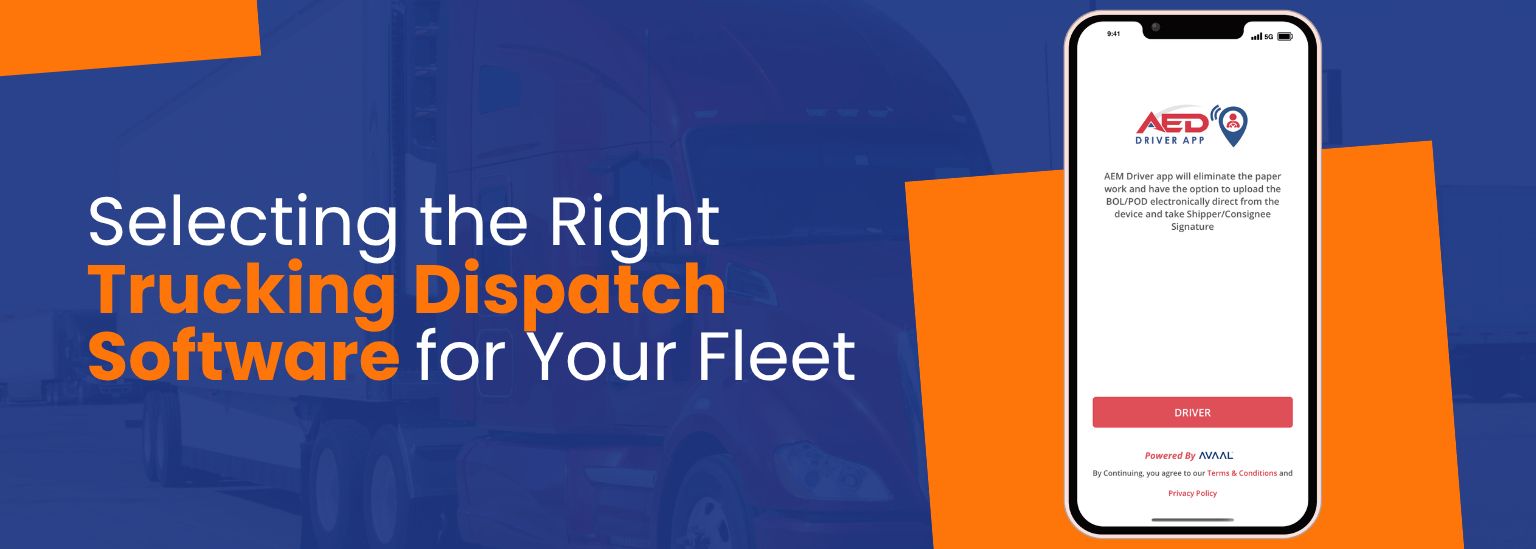
Selecting the Right Trucking Dispatch Software for Your Fleet
- May 14, 2026
- AVAAL Technology Solutions
Running a trucking company today is far more complex than it was even a few years ago. Dispatchers are expected to manage drivers, coordinate loads, monitor deliveries, handle customer communication, track paperwork, and keep operations moving without delays. At the same time, fleets across Canada and the United States are dealing with rising fuel costs, tighter delivery schedules, driver shortages, and growing customer expectations.
We have seen many transportation companies try to manage these challenges using spreadsheets, phone calls, disconnected systems, or outdated dispatch tools. While those methods may work for a short period, they eventually slow operations down and create unnecessary inefficiencies. Missed updates, delayed communication, scheduling errors, and limited visibility can quickly affect profitability and customer satisfaction.
That is why selecting the right trucking dispatch software has become one of the most important decisions a transportation business can make. The right software does more than organize dispatching tasks. It helps improve operational visibility, reduce manual work, support drivers, streamline communication, and create a stronger foundation for growth.
At AVAAL, we understand that every trucking operation is different. Some companies manage local deliveries while others coordinate cross-border freight throughout North America. Some fleets operate with only a few trucks while others manage hundreds of drivers and trailers every day. No matter the size of the business, dispatch software should simplify operations rather than create additional complexity.
Why Trucking Dispatch Software Matters More Than Ever
The transportation industry has become increasingly dependent on real-time communication and operational visibility. Customers expect accurate updates, faster deliveries, and reliable service. Dispatchers need immediate access to shipment information, driver availability, route status, and delivery timelines to meet those expectations consistently.
Without proper dispatch software, many transportation companies rely heavily on manual coordination. Dispatchers spend valuable time making phone calls, searching for paperwork, updating spreadsheets, or trying to track shipments through disconnected systems. These manual processes often create delays and increase the risk of costly errors.
Modern trucking dispatch software centralizes these operations into one connected platform. Dispatchers can assign loads, track drivers, monitor deliveries, communicate with drivers, and manage operational workflows more efficiently. Instead of reacting to problems after they occur, companies can make proactive decisions using real-time information.
Understanding What Your Fleet Actually Needs
Before selecting trucking dispatch software, it is important to evaluate the specific needs of your transportation operation. Many companies make the mistake of purchasing software based only on price or general popularity without considering how the system will support daily workflows.
A local delivery company may prioritize route scheduling and real-time tracking, while a long-haul carrier may need stronger load management and cross-border dispatch capabilities. Freight brokers may focus more on communication tools and shipment visibility, while private fleets may require deeper integration with accounting and maintenance systems.
We always encourage transportation companies to start by identifying their biggest operational challenges. Are dispatchers spending too much time on manual scheduling? Are drivers missing updates or delivery instructions? Is customer communication inconsistent? Are delays affecting profitability?
Once these operational gaps are clear, it becomes easier to identify the software features that will provide the most value. Dispatch software should solve real operational problems instead of adding unnecessary complexity or features that your business may never use.
Key Features Every Trucking Dispatch Software Should Include
Not all trucking dispatch software platforms are built the same. Some systems focus only on basic scheduling while others provide complete transportation management capabilities. Choosing the right software means understanding which features are essential for improving operational efficiency.
Real-Time Dispatch Visibility
Dispatchers need immediate visibility into truck locations, driver activity, load status, and delivery progress. Real-time tracking allows operations teams to respond quickly to delays, traffic issues, or route changes before they affect customers.
Modern dispatch software should provide live updates from a centralized dashboard. Dispatchers should be able to view fleet activity, monitor shipment timelines, and communicate with drivers without switching between multiple systems. Real-time visibility improves decision-making while reducing operational confusion.
Driver Communication Tools
Strong communication between dispatchers and drivers is essential for efficient fleet operations. Delayed updates or unclear instructions can create missed deliveries, scheduling issues, and frustrated drivers.
The right trucking dispatch software should include built-in communication tools that allow dispatchers to send route updates, load details, delivery instructions, and schedule changes directly to drivers. Mobile access is especially important because drivers need real-time information while on the road.
Clear communication also improves driver satisfaction. Drivers who receive accurate and timely updates are often able to complete deliveries more efficiently and with less stress. AVAAL’s Trucking Dispatch Specialist training course can also help your team master communication best practices and software tools from day one.
Load and Route Optimization
Fuel costs remain one of the largest operational expenses for trucking companies. Dispatch software should help optimize routes and improve load planning to reduce unnecessary mileage and idle time.
Efficient load management helps dispatchers maximize trailer capacity while reducing empty miles. Route optimization tools can also identify more efficient delivery paths based on traffic conditions, distance, and scheduling requirements.
These improvements help transportation companies improve profitability while supporting better customer service. Pairing smart routing with the AVAAL Blue Fuel Card can generate additional savings on fuel purchases across North America.
Integration with Transportation Operations
One of the biggest problems with outdated dispatch systems is the lack of integration between departments. Dispatching, accounting, maintenance, compliance, and reporting often operate separately, creating communication gaps and duplicate work.
Modern trucking dispatch software should integrate with other transportation management functions. Dispatch teams should be able to access operational data without relying on disconnected spreadsheets or multiple software platforms.
Integrated systems improve accuracy, reduce manual data entry, and help transportation companies operate more efficiently overall.
Scalability Is Critical for Long-Term Growth
Many transportation companies select software based only on their current fleet size without considering future growth. A dispatch system that works for five trucks may not support the operational demands of fifty or one hundred vehicles.
Scalable trucking dispatch software allows transportation businesses to expand operations without replacing their entire system later. As fleets grow, dispatchers need better automation, stronger reporting capabilities, and improved operational visibility.
We have worked with many transportation companies that initially relied on simple dispatch tools but quickly outgrew them as shipment volumes increased. Migrating to a new system later can create unnecessary disruption and additional costs.
Choosing scalable software from the beginning helps businesses prepare for long-term growth while maintaining operational consistency. AVAAL’s consulting services can also support your growth by helping secure the right trucking authorities and certifications as your fleet expands.
Why Ease of Use Matters in Dispatch Software
One of the most overlooked factors when selecting trucking dispatch software is usability. Even the most advanced system can create problems if dispatchers and drivers struggle to use it effectively.
Transportation companies operate in fast-paced environments where teams need quick access to information. Complex interfaces, confusing workflows, or difficult onboarding processes can slow operations down instead of improving efficiency.
Dispatch software should simplify daily tasks rather than create additional administrative work. Dispatchers should be able to schedule loads, monitor routes, and communicate with drivers without navigating complicated systems.
Driver adoption is equally important. Mobile applications and communication tools should be easy for drivers to use while on the road. The more intuitive the software is, the faster teams can adapt and benefit from the system. Teams looking to accelerate onboarding can benefit from AVAAL’s Trucking Dispatch Specialist course, which is designed specifically to build practical dispatch skills quickly.
Data and Reporting Help Improve Decision-Making
Modern trucking operations generate large amounts of operational data every day. Dispatch software should help transportation companies turn that information into actionable business insights.
Reporting tools allow fleet managers to monitor delivery performance, driver productivity, fuel usage, route efficiency, and dispatch operations from one centralized system. This visibility helps companies identify inefficiencies and improve operational planning.
For example, dispatch reports may reveal recurring delays on specific routes or highlight underutilized trucks within the fleet. Transportation companies can use this information to improve scheduling, optimize routes, and reduce unnecessary costs.
Data-driven decision-making has become increasingly important in the transportation industry. Companies that can analyze operational performance effectively are often better positioned to improve profitability and customer service.
Cloud-Based Dispatch Software Offers Greater Flexibility
Many transportation companies are moving away from traditional desktop systems and adopting cloud-based dispatch software instead. Cloud-based systems provide greater accessibility, flexibility, and operational visibility for modern transportation businesses.
With AVAAL’s cloud-based freight management software, dispatchers, fleet managers, and drivers can access operational information from multiple locations and devices. This is especially important for transportation companies managing remote teams or cross-border operations.
Cloud systems also simplify software updates, data backups, and system maintenance. Transportation companies no longer need to rely heavily on internal servers or complicated infrastructure management.
As the transportation industry becomes more technology-driven, cloud-based dispatch solutions provide greater adaptability for evolving operational demands.
How AVAAL Express Dispatch Supports Transportation Operations
AVAAL Express Dispatch was built to help transportation companies simplify dispatching and improve operational control. We understand the real-world challenges that dispatchers, fleet managers, and trucking companies face every day because our solutions are designed specifically for the transportation industry.
AVAAL Express Dispatch helps carriers manage loads, routes, driver communication, scheduling, and fleet visibility from one centralized platform. Our goal is to reduce manual work, improve operational coordination, and help transportation companies make faster and more informed decisions.
For carriers managing cross-border freight, AVAAL’s ACE/ACI eManifest software integrates directly to keep customs documentation accurate and border crossings running smoothly. Companies that also need customs bonds or corporate branding support can access those services through AVAAL’s full suite of solutions.
We believe dispatch software should help transportation companies grow without creating unnecessary complexity. That is why AVAAL focuses on practical solutions that support real operational needs across the trucking industry.
Conclusion
Selecting the right trucking dispatch software is one of the most important operational decisions a transportation company can make. The right system improves communication, increases visibility, reduces manual work, and helps fleets operate more efficiently across daily operations.
At AVAAL, we believe transportation companies deserve dispatch solutions that are built for the realities of modern trucking operations. Choosing the right software today can help create stronger, more efficient, and more scalable transportation operations for the future. Contact AVAAL to book a free demo and see how our platform can transform your dispatching operations.
- October 23, 2026


- October 9, 2026


- December 15, 2025


- December 19, 2024


- May 10, 2024
