



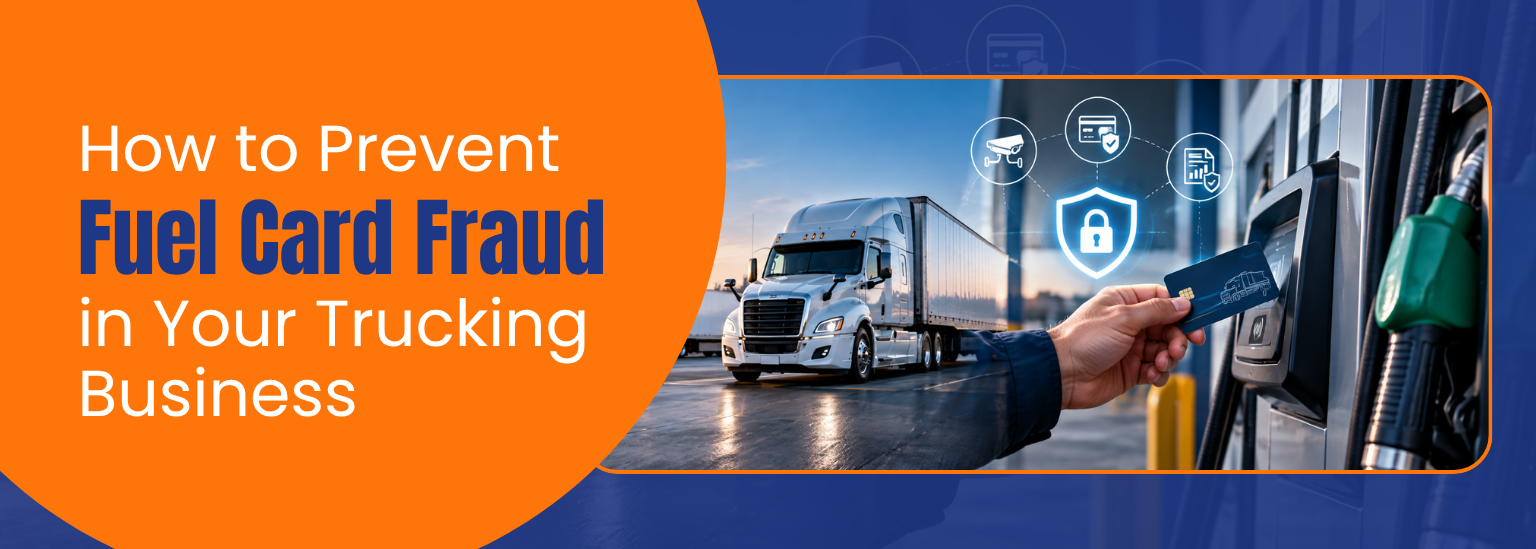
How to Prevent Fuel Card Fraud in Your Trucking Business
- October 9, 2026
- AVAAL Technology Solutions
Fuel is one of the biggest operating expenses for a trucking company. When you manage several trucks and drivers, even small amounts of unauthorized fuel spending can add up quickly.
Fuel card fraud does not always involve a stolen card. It can also happen when a card is shared, a PIN is compromised, a driver makes an unauthorized purchase, or a fuel transaction does not match the vehicle’s actual activity.
For Canadian trucking companies operating across provinces and into the United States, controlling fuel spending requires more than simply issuing drivers a fuel card. Businesses need clear spending policies, transaction visibility and security controls that make unusual activity easier to identify.
A well-managed fuel card for trucking companies can help reduce these risks while giving fleet managers better control over fuel expenses.
What Is Fuel Card Fraud?
Fuel card fraud occurs when a fuel card or its account information is used for an unauthorized purchase.
For a trucking company, this could include:
- Using a company fuel card for a personal vehicle
- Sharing a fuel card or PIN with another person
- Purchasing fuel for a different vehicle
- Buying fuel beyond the vehicle’s normal capacity
- Making unauthorized purchases after a card is lost or stolen
- Using a card outside approved times or locations
- Purchasing products that are not permitted under the company’s fuel policy
Fraud is not always obvious.
A transaction may look like a normal fuel purchase on a monthly statement. Without additional information about the vehicle, driver, location and purchase, it can be difficult to determine whether the transaction was legitimate.
This is why fuel card fraud prevention should be part of a fleet’s everyday fuel management process.
Why Fuel Card Fraud Is a Concern for Canadian Fleets
Fuel costs already place significant pressure on trucking margins. An unauthorized purchase adds a cost without providing any value to the business.
For a small carrier, several questionable transactions can affect the monthly budget. For a larger fleet, repeated misuse across multiple vehicles can become a much larger expense.
There is also an administrative cost.
When a fuel transaction looks unusual, someone needs to investigate it. Staff may have to compare receipts, speak with drivers, check dispatch records and review vehicle locations.
Without a centralised system, this process can take considerable time.
The best approach is to put controls in place before problems occur.
8 Ways to Prevent Fuel Card Fraud
1. Set Spending Limits for Each Driver or Card
Not every driver has the same fuel requirements.
A long-haul driver may have significantly different fuel needs from a driver operating a regional route. Giving every card the same unrestricted access can make it harder to identify unusual spending.
Set appropriate limits based on your fleet’s operations.
Depending on the fuel card provider, you may be able to control spending by:
- Dollar amount
- Driver
- Card
- Day
- Time of day
- Product type
- Location
AVAAL fuel cards provide spending controls that allow businesses to set limits by employee or card and restrict usage by amount, time, day and product.
These controls can help prevent a driver from making purchases outside the company’s fuel policy.
2. Give Each Driver Proper Identification
Sharing fuel cards between drivers creates an unnecessary security risk.
When a card is linked to a specific driver or employee identification number, it becomes easier to determine who made a transaction.
Driver identification can also discourage misuse because employees know that transactions can be connected to their assigned card or account.
AVAAL’s fuel card program uses driver identification and PIN authorisation at the pump to help control fuel spending and reduce misuse.
A simple rule can make a significant difference:
One driver, one assigned card, one PIN.
3. Protect Fuel Card PINs
A fuel card PIN should be treated like any other sensitive payment credential.
Drivers should never:
- Write the PIN on the card
- Share the PIN with another driver
- Store the PIN where anyone can easily access it
- Use the same PIN for multiple company accounts when avoidable
- Give the PIN to an unauthorised person
Fleet managers should also have a process for immediately changing or disabling access when a driver leaves the company.
Strong PIN practices are a basic but important part of fuel card security.
4. Match Fuel Purchases With Vehicle Activity
One of the most effective ways to identify suspicious fuel transactions is to compare the purchase with the vehicle’s actual activity.
For example, consider a truck that is recorded as being several hundred kilometres away from the fuel station when the transaction takes place.
That transaction deserves further review.
The same applies when:
- The fuel purchase exceeds the vehicle’s tank capacity
- Two fuel purchases occur unusually close together
- The purchase occurs outside the driver’s normal schedule
- The fuel type does not match the vehicle
- The transaction occurs at an unexpected location
Fuel card data becomes much more useful when it can be reviewed alongside fleet, GPS or telematics information.
The objective is not to assume that every unusual transaction is fraud. A transaction may have a legitimate explanation. The objective is to identify exceptions quickly so they can be reviewed.
5. Monitor Transactions Regularly
Waiting until the end of the month to review fuel spending can allow problems to continue.
A better approach is to monitor transactions throughout the month.
Look for patterns such as:
- Unusually high fuel purchases
- Frequent purchases from unexpected locations
- Multiple transactions within a short period
- Fuel purchases outside normal operating hours
- Spending that exceeds established limits
- Transactions that do not match the vehicle’s activity
Regular monitoring gives fleet managers an opportunity to investigate issues before they become recurring problems.
6. Use Fuel Card Reporting to Find Unusual Spending
Good reporting should do more than show a total fuel bill.
Fleet managers should be able to understand who purchased fuel, where the purchase happened, when it happened and how much was purchased.
This information can help businesses identify trends across the fleet.
For example, if one vehicle consistently has higher fuel spending than similar vehicles operating on comparable routes, it may be worth reviewing its fuel transactions, mileage and operating conditions.
AVAAL provides fuel expense tracking and reporting designed to help businesses monitor spending by employee, location and time.
This type of visibility can make fuel management much more proactive.
7. Act Quickly When a Card Is Lost or Stolen
A lost fuel card can become a serious problem if it is not reported quickly.
Your fleet should have a clear process for lost or stolen cards.
Drivers should know:
- Who to contact
- How quickly they need to report the card
- How the card will be blocked
- What information they need to provide
- How a replacement card will be issued
The faster a lost card is blocked, the smaller the opportunity for unauthorised spending.
Fleet managers should also review recent transactions when a card is reported missing.
8. Train Drivers on Fuel Card Policies
Technology cannot replace a clear company policy.
Drivers should understand exactly how fuel cards are supposed to be used.
Your policy should explain:
- Who can use the card
- What purchases are permitted
- Where cards can be used
- Whether cards can be used for non-fuel purchases
- How PINs must be protected
- What to do if a card is lost
- How receipts or transaction records should be handled
- What happens when a purchase is outside the approved policy
Short, regular reminders can help prevent mistakes and make expectations clear.
Common Warning Signs of Fuel Card Fraud
No single transaction automatically proves fraud. However, certain patterns should prompt a closer review.
Fuel Purchased When the Vehicle Was Elsewhere
If the vehicle’s location does not correspond with the fuel station, check the transaction and supporting records.
More Fuel Than the Tank Can Hold
A fuel purchase that exceeds the vehicle’s known tank capacity is a clear reason to investigate.
Multiple Fuel Purchases Close Together
Two or more purchases within an unusually short period may indicate card sharing, duplicate transactions or another issue.
Unusual Fueling Locations
A purchase far outside the vehicle’s normal route may need additional verification.
Fuel Type Does Not Match the Vehicle
Purchases should be consistent with the vehicle’s fuel requirements.
Spending Suddenly Increases
A sudden change in a driver’s or vehicle’s fuel spending can be a useful signal for further review.
Again, these are warning signs, not automatic proof of fraud. Fleet managers should review the circumstances before taking action.
Why Manual Fuel Tracking Is Not Enough
Many smaller trucking companies still rely on paper receipts, spreadsheets and manual reconciliation.
These methods can work at a small scale, but they become difficult to manage as the fleet grows.
Imagine reviewing fuel records for 50 trucks at the end of every month.
Your team may need to:
- Collect receipts
- Match receipts to transactions
- Check driver information
- Compare fuel volumes
- Review vehicle mileage
- Check routes
- Investigate unusual purchases
- Enter information into accounting software
A digital fuel card system can reduce much of this administrative work by keeping transaction information in one place.
AVAAL’s fuel card offering includes automatic fuel accounting and expense tracking, along with reporting designed to reduce the need for manual receipt collection and reconciliation.
Fuel Card Fraud Prevention Starts With Better Visibility
A fuel card should not be treated only as a payment method.
For a trucking company, it can become part of a broader fuel management strategy.
When fuel transactions are connected with information about drivers, vehicles and operations, fleet managers have a better opportunity to identify unusual activity.
This is particularly valuable for Canadian carriers that operate long-distance routes across multiple provinces and into the United States.
A transaction that looks unusual on its own may make sense when the full trip is considered.
That is why context matters.
How AVAAL Helps Trucking Companies Control Fuel Spending
AVAAL Blue fuel cards are designed for trucking companies that need fuel savings along with better control over fleet spending.
The programme offers pre-negotiated fuel discounts, security controls, reporting and fuel expense management. AVAAL states that its fuel card network includes truck stops and gas stations across Canada and the United States.
AVAAL has also partnered with Imperial Oil to provide discounted rates through participating Esso Commercial Cardlocks and travel centres across Canada. The partnership includes fraud protection, expense controls, access to fuel rates and integration with AVAAL Freight Management software.
For trucking businesses, this means fuel management can be handled as part of the wider operation rather than as a separate administrative task.
Build a Stronger Fuel Card Policy
Preventing fuel card fraud does not require a complicated process.
Start with the basics:
Assign cards properly.
Give each driver or authorised employee the correct card.
Set reasonable limits.
Control how much can be spent and when purchases can be made.
Protect PINs.
Never allow drivers to share payment credentials.
Monitor transactions.
Review unusual spending instead of waiting for month-end.
Compare fuel and vehicle information.
Look for transactions that do not match vehicle activity.
Act quickly.
Block lost or compromised cards as soon as possible.
Keep drivers informed.
Make your fuel card policy clear and easy to follow.
These steps can reduce the opportunity for misuse while making legitimate fuel spending easier to manage.
Final Thoughts
Fuel card fraud can quietly reduce the profitability of a trucking business.
The challenge is not simply preventing stolen cards. It is controlling how fuel cards are used, identifying unusual transactions and giving fleet managers enough information to act quickly.
For Canadian trucking companies, a strong fuel management process combines spending controls, driver identification, transaction monitoring, reporting and clear company policies.
A fuel card with the right controls can help protect your fuel budget while reducing administrative work.
AVAAL provides fuel card solutions designed for trucking companies of different sizes, with fuel savings, spending controls, security features and reporting built into the programme.
Ready to take greater control of your fleet’s fuel spending? Apply for an AVAAL fuel card and put stronger fuel controls in place for your trucking business.

- October 9, 2026


- December 15, 2025


- December 19, 2024


- May 10, 2024
