



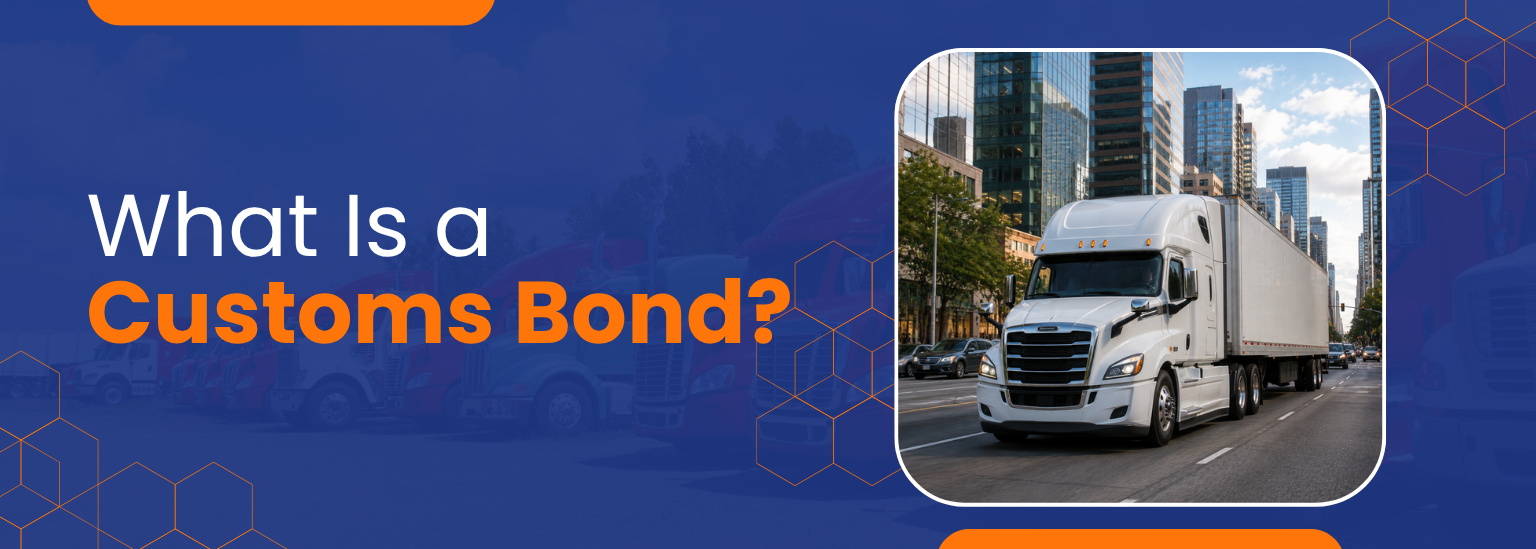
What is a Customs Bond?
- July 8, 2026
- AVAAL Technology Solutions
Key takeaways
- A customs bond is a financial guarantee to customs authorities that duties, taxes, fees, and obligations will be paid. It protects government revenue, not your cargo.
- In the US, a bond is generally required for commercial imports valued over USD $2,500, or for any value if goods are regulated by another federal agency.
- In Canada, the rules changed under CARM. Since May 20, 2025, all commercial importers must post their own financial security to use Release Prior to Payment. A broker’s security no longer covers them.
- Since January 1, 2026, a customs broker’s business number can no longer be used to release or account for commercial goods on an importer’s behalf.
- A continuous bond is usually the most cost-effective option for frequent importers and also satisfies ISF requirements for ocean freight.
For trucking companies and importers moving commercial freight across the Canada–US border, a customs bond is essential to smooth, compliant cross-border transportation.
A customs bond is a financial guarantee that assures customs authorities all applicable duties, taxes, fees, and regulatory obligations will be paid. It protects government revenue while allowing eligible shipments to move through clearance more efficiently.
Whether your business needs a Canadian customs bond, a US single entry bond, or a continuous bond, having the right one in place minimizes delays, supports compliance, and keeps freight moving.
At AVAAL, we help trucking companies, carriers, importers, and logistics businesses obtain the bonds they need to operate across North America. With decades of experience in transportation, our team simplifies the process: clarifying requirements, preparing documentation, and securing the right bond for your operations.
How a Customs Bond Works
A customs bond, also called a surety bond or carrier bond in certain cases, is a three-party agreement between:
- The principal. The importer, carrier, warehouse operator, or business responsible for the shipment.
- The surety company. A licensed insurance or surety provider that guarantees payment if the principal defaults.
- The customs authority. U.S. Customs and Border Protection, or CBP, or the Canada Border Services Agency, or CBSA, which the bond protects.
A customs bond is not insurance for the importer. It protects the government by ensuring duties, taxes, penalties, and other obligations are paid if necessary.
Why Customs Bonds Matter
A customs bond offers several advantages for businesses that import regularly: faster customs clearance, reduced delays at ports of entry, deferred payment of duties and taxes where applicable, improved compliance, greater credibility with customs authorities, and financial protection for government agencies.
Without the appropriate bond, shipments may be delayed, held at the border, or require immediate payment of duties before release.
US Customs Bonds
In the United States, customs bonds are administered by U.S. Customs and Border Protection. A bond is generally required for:
- Commercial imports valued over USD $2,500
- Goods regulated by federal agencies such as the FDA, USDA, or EPA, regardless of value
- Certain bonded transportation and warehouse activities
Not every shipment needs the same bond, so choosing the right type matters.
Single Entry Bond
A single entry bond covers one shipment entering the United States. It suits businesses that import occasionally or need coverage for a one-time shipment.
Continuous Bond
A continuous bond remains valid for 12 months and covers unlimited imports through all US ports of entry. It is generally the most cost-effective option for companies importing throughout the year, and it also satisfies Importer Security Filing, or ISF, bond requirements for ocean freight.
Canadian Customs Bonds and CARM
Canada modernized its customs security model through the CBSA Assessment and Revenue Management, or CARM, initiative. This changed how importers post financial security, and the rules are now in full effect.
Since May 20, 2025, all commercial importers must post their own financial security, such as a surety bond or cash deposit, to enrol in and benefit from the Release Prior to Payment, or RPP, program. A customs broker’s RPP security no longer covers the importer. Since January 1, 2026, a customs broker’s business number can no longer be used to release or account for commercial goods on an importer’s behalf.
RPP lets eligible shipments be released before duties and taxes are paid, which improves cash flow and reduces border delays. Importers who are not enrolled in RPP must pay all duties and taxes before their goods are released.
Benefits of a Canadian Customs Bond
A Canadian customs bond allows businesses to release commercial goods before duties and taxes are paid, improve cash flow through deferred payment, avoid cash deposits at the border, maintain uninterrupted import operations, and meet CBSA security requirements under CARM.
Without approved financial security, importers must pay duties and taxes immediately before goods are released.
Who Needs a Customs Bond?
Depending on your activities, a bond may be required for importers of commercial goods, highway carriers, freight forwarders, customs brokers, bonded warehouses, marine carriers, air cargo operators, and businesses in customs duty deferral programs.
Requirements vary by the type of goods, shipment value, transportation method, and customs program used.
How to Obtain a Customs Bond
Obtaining a bond is straightforward when working with an experienced customs broker or licensed surety provider. The application typically requires your business name and legal structure, business registration number, import and export details, description of goods, estimated annual import volume, and financial information for certain bond types.
Once approved, the surety company issues the bond, which is then registered with the appropriate customs authority.
Single Entry vs Continuous Bond
| Single Entry Bond | Continuous Bond |
| Covers one shipment | Covers unlimited shipments |
| Best for occasional importers | Best for frequent importers |
| Purchased per shipment | Valid for one year |
| Lower upfront cost | Better long-term value |
Businesses importing several shipments a year typically benefit from a continuous bond due to its convenience and overall cost savings.
Why AVAAL Is the Right Customs Bond Partner
Customs regulations are complex, they change often, and CARM has just rewritten the rules for every Canadian importer. Getting the bond wrong means held shipments, cash tied up at the border, and lost time. Getting it right is what AVAAL has done for carriers and importers for more than 20 years.
We are not a bond reseller learning customs on your shipment. We work in cross-border transportation every day, on both sides of the border, which means we get you the correct bond type the first time, complete your documentation accurately, keep you compliant with both CBSA and CBP, and steer you cleanly through evolving requirements like CARM. The payoff is a process that takes the administrative weight off your team while keeping your freight moving.
How AVAAL Can Help
At AVAAL, we help carriers, importers, and logistics companies navigate Canadian and US customs requirements with confidence. As a dual-market specialist, our team handles Canadian customs bonds, US customs bonds, carrier bond requirements, customs documentation, cross-border compliance guidance, and CARM-related support for Canadian importers, all under one roof.
That single-partner, full-coverage approach is why carriers choose us over piecing the work across multiple providers. Whether you are importing your first shipment or managing cross-border logistics every day, AVAAL simplifies the customs process and keeps your business moving. Contact AVAAL today to know more.
Frequently Asked Questions
Is a customs bond the same as cargo insurance?
No. Cargo insurance protects your shipment against loss or damage. A customs bond guarantees payment of customs duties, taxes, and regulatory obligations to the government.
How long does a customs bond remain valid?
A single entry bond covers one shipment only. A continuous bond generally remains active for one year and renews annually unless cancelled.
Do I still need my own bond in Canada if I use a customs broker?
Yes. Since May 20, 2025, commercial importers must post their own financial security under CARM to use Release Prior to Payment. A broker’s security no longer covers you.
Can individuals obtain a customs bond?
Yes. Individuals importing commercial goods or shipments requiring a bond can obtain one through a licensed surety or customs broker.
What happens if I don’t have a customs bond?
Your shipment may be delayed, held by customs, or require immediate payment of duties and taxes before release.
Can AVAAL help me obtain both Canadian and US customs bonds?
Yes. AVAAL assists with customs bond requirements for both Canada and the United States and helps ensure compliance with changing cross-border regulations.


- August 24, 2026
- August 21, 2026
- July 21, 2026

- December 15, 2025


- December 19, 2024


- May 10, 2024
