




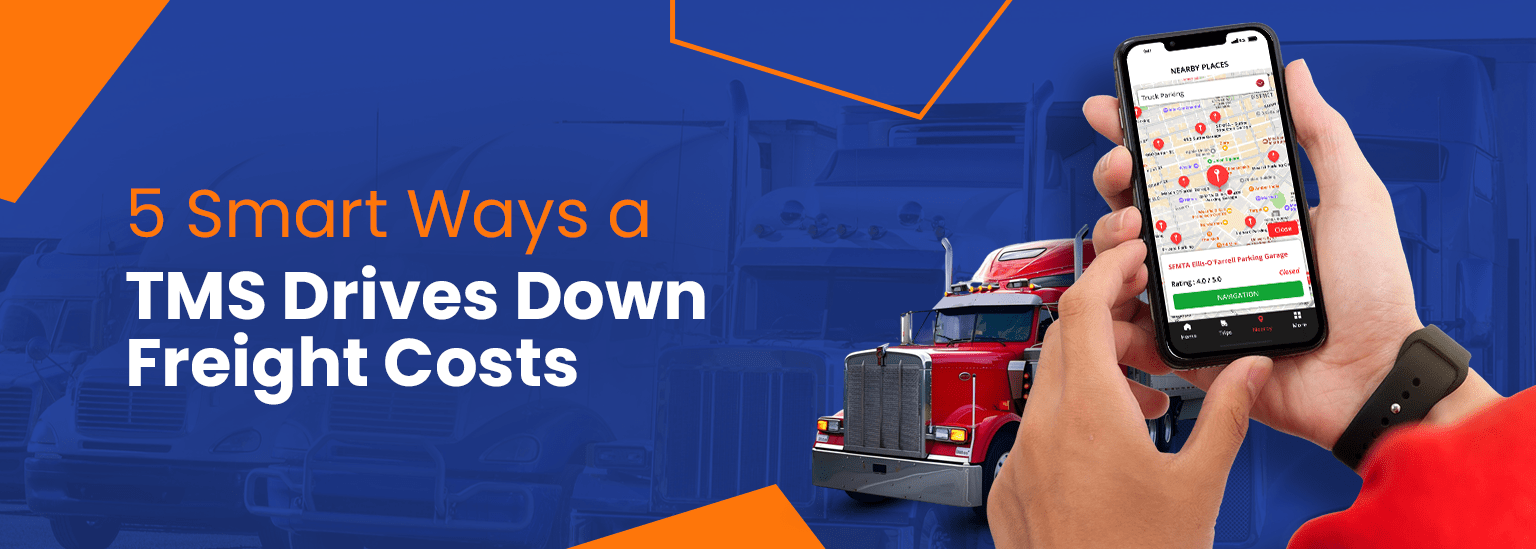
Smart Ways a TMS Drives Down Freight Costs
- January 13, 2026
- Lightspeed
Freight costs continue to be one of the most volatile and challenging components of supply chain spend. Fuel price fluctuations, capacity constraints, service-level expectations, and increasing complexity across transportation networks all put sustained pressure on logistics budgets. For shippers seeking both cost control and operational resilience, a Transportation Management System (TMS) has become a strategic necessity rather than a tactical tool.
At Avaal, we work with organizations that want to move beyond reactive freight management toward data-driven, and optimized transportation operations.
What Is a Transportation Management System (TMS)?
A Transportation Management System (TMS) is a specialized software solution designed to manage, optimize, and automate an organization’s transportation operations. It supports the end-to-end lifecycle of freight movement from planning and execution to monitoring, settlement, and performance analysis.
At its core, a TMS acts as the central system of record for transportation, enabling organizations to replace manual, fragmented processes with standardized, data-driven workflows. By integrating with ERP, WMS, and carrier systems, a TMS provides real-time visibility and control across inbound, outbound, and intercompany shipments.
Key capabilities of a modern TMS typically include:
- Shipment planning, routing, and load optimization
- Carrier and mode selection based on cost and service rules
- Freight execution, tendering, and tracking
- Freight audit, settlement, and cost allocation
- Transportation analytics, reporting, and performance management
More than an operational tool, a TMS is a strategic enabler. It helps organizations reduce freight costs, improve service reliability, strengthen carrier relationships, and adapt quickly to changing market conditions. For companies managing complex transportation networks, a TMS is essential for turning logistics execution into a competitive advantage.
Five Smart Ways a TMS Drives Down Freight Costs
Below are five smart ways a Transportation Management System (TMS) helps organizations reduce freight costs while simultaneously improving efficiency, visibility, and overall supply chain performance:
1. Optimized Route and Load Planning
One of the most immediate cost-saving benefits of a TMS is intelligent route and load optimization. Manual planning or spreadsheet-based approaches often lead to underutilized trailers, inefficient routing, and unnecessary miles.
A modern Transportation Management System uses algorithms and real-time data to:
- Consolidate shipments across orders, locations, and modes
- Identify the most cost-effective routes based on distance, transit time, and constraints
- Maximize trailer utilization while respecting service requirements
By reducing empty miles and improving asset utilization, organizations can significantly lower per-shipment transportation costs.
2. Mode and Carrier Optimization
Selecting the right carrier and transportation mode for each shipment is critical to cost control. Without system-driven analysis, decisions are often based on habit, limited visibility, or static rate tables.
A Transportation Management System enables shippers to:
- Compare rates and service levels across multiple carriers and modes
- Automatically tender shipments to the most cost-effective qualified carrier
- Balance cost, transit time, and reliability based on business rules
This structured approach ensures freight is moved using the optimal option every time, rather than defaulting to higher-cost choices.
3. Improved Freight Spend Visibility and Control
You cannot control what you cannot see. Many organizations struggle with fragmented transportation data spread across carriers, invoices, and internal systems.
A Transportation Management System MS centralizes freight data, providing:
- End-to-end visibility into transportation spend
- Lane-level and carrier-level cost analysis
- Trend reporting to identify cost drivers and anomalies
With accurate, timely insights, logistics and finance teams can proactively manage budgets, identify savings opportunities, and make informed strategic decisions.
4. Automated Audit, Settlement, and Compliance
Freight invoice errors and accessorial charges are a hidden but significant source of unnecessary cost. Manual audit processes are time-consuming and often inconsistent.
A TMS automates freight audit and settlement by:
- Matching carrier invoices against contracted rates and shipment data
- Flagging discrepancies and invalid charges
- Enforcing compliance with routing guides and carrier agreements
This automation not only reduces overpayment but also improves carrier accountability and internal efficiency.
5. Data-Driven Continuous Improvement
Beyond day-to-day execution, a Transportation Management System supports long-term freight cost reduction through continuous improvement. Historical transportation data becomes a strategic asset when analyzed effectively.
With a TMS, organizations can:
- Identify high-cost lanes and chronic inefficiencies
- Support carrier negotiations with accurate performance and cost data
- Model scenarios for network design, mode shifts, and volume changes
Over time, these insights enable smarter transportation strategies that compound cost savings year over year.
Turning Transportation into a Competitive Advantage
Reducing freight costs is not about cutting corners; it is about making smarter, data-driven decisions across the transportation lifecycle. A robust TMS provides the visibility, control, and intelligence required to manage complexity while protecting margins.
At Avaal, our Transportation management software is designed to help organizations optimize freight spend, improve service levels, and build more resilient supply chains. By leveraging advanced analytics and automation, companies can transform transportation from a cost center into a source of competitive advantage.
Ready to reduce your freight costs? Connect with Avaal to learn how our TMS solutions can support your logistics and supply chain goals.
Frequently Asked Questions (FAQs)
How does a TMS help reduce freight costs?
A TMS reduces freight costs by optimizing routes and loads, selecting the most cost-effective carriers and modes, eliminating billing errors through automated audits, and providing data-driven insights to continuously improve transportation decisions.
Is a TMS only useful for large enterprises?
While large enterprises benefit significantly from a TMS, mid-sized and growing organizations also gain value through improved visibility, process automation, and cost control—especially as transportation complexity increases.
How quickly can companies see cost savings after implementing a TMS?
Many organizations begin to see measurable savings within the first few months of implementation, particularly through freight audit automation, improved carrier selection, and better load consolidation.
Can a TMS support multiple transportation modes?
Yes. A modern TMS supports multiple modes, including truckload (TL), less-than-truckload (LTL), parcel, intermodal, ocean, and air, allowing organizations to choose the most cost-effective option for each shipment.
How does a TMS improve carrier performance and accountability?
Avall TMS tracks carrier performance metrics such as on-time delivery, cost compliance, and service reliability. This data enables more informed carrier selection, performance reviews, and contract negotiations.
Does a TMS integrate with ERP and other supply chain systems?
Most enterprise-grade TMS platforms, including Avaal’s solutions, are designed to integrate seamlessly with ERP, WMS, and other supply chain systems, ensuring consistent data flow and end-to-end visibility.
How does freight audit and settlement work in a TMS?
The TMS automatically matches carrier invoices against contracted rates and shipment data. Any discrepancies are flagged for review, helping prevent overcharges and ensuring compliance with negotiated agreements.
Can a TMS help with long-term transportation strategy?
Yes. Beyond execution, a TMS provides historical data and analytics that support network design, lane optimization, mode shifts, and carrier sourcing strategies, enabling continuous improvement over time.
What makes Avaal’s TMS different from other solutions?
Avaal’s TMS combines advanced analytics, automation, and deep supply chain expertise to help organizations reduce freight costs while improving service levels and operational resilience. It is designed to scale with business growth and evolving logistics needs.

- February 17, 2026


- January 13, 2026


- December 15, 2025


- December 19, 2024


- May 10, 2024


