




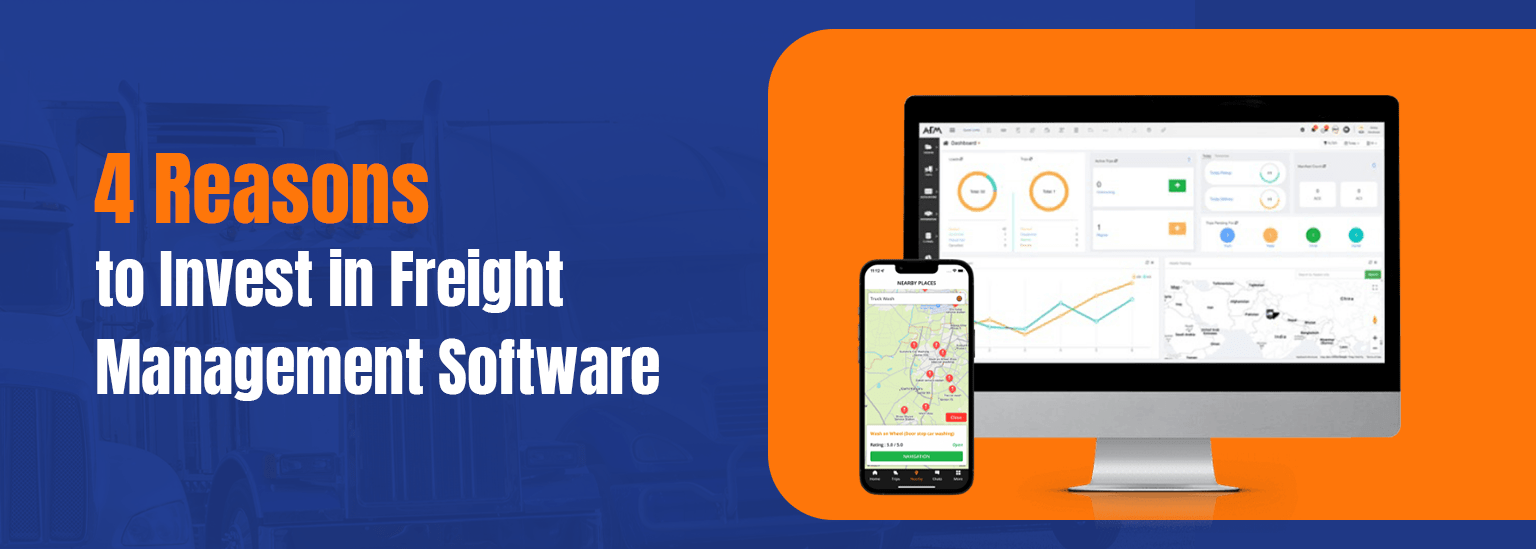
4 Reasons to Invest in Freight Management Software
- December 23, 2025
- Avaal
Whether you operate a small fleet, manage a growing trucking company, or oversee large-scale freight operations, the need for seamless, accurate, and efficient management has never been greater.
This is where Freight Management Software (FMS) becomes a powerful asset. Instead of juggling spreadsheets, paper documents, manual dispatching, or outdated legacy systems, modern FMS gives you a centralized platform to manage everything from dispatching to billing to tracking freight in real time.
1. Streamlined Operations Through Automation
Running a freight or trucking business involves loads, paperwork, drivers, schedules, customer communication, billing, and compliance. Managing these tasks manually can quickly lead to mistakes, delays, and unnecessary stress.
Freight management software eliminates these challenges by automating routine tasks and integrating your entire workflow into one platform.
1.1 Centralized Dispatching and Load Assignment
Dispatching is one of the most time-consuming tasks in logistics. Without a proper system, dispatchers spend hours making calls, matching drivers to loads, and manually updating schedules.
With freight management software, dispatching becomes automated and intelligent. The system suggests the best driver and truck based on:
- Availability
- Location
- Equipment type
- Hours of service
- Delivery deadlines
This improves accuracy, reduces back-and-forth communication, and helps dispatchers handle more loads in less time.
1.2 Seamless Digital Documentation
Paperwork has always been a burden in the trucking world. Traditional bills of lading, proof of delivery documents, inspection forms, and customer documents can easily be damaged, lost, or mishandled.
Freight management software converts your operations into a paperless workflow where:
- Drivers upload digital PODs
- Customers receive instant documentation
- Files auto-save in the system
- No paperwork is ever lost
This shift not only saves time but also reduces administrative errors that can lead to costly disputes or delayed payments.
1.3 Improved Team Collaboration
Since everyone works from the same centralized system—drivers, dispatchers, customers, and management—communication becomes far more efficient. Teams can access updated information instantly without phone calls or emails, improving overall coordination and reducing misunderstandings.
2. Real-Time Tracking and Full Shipment Visibility
In today’s fast-paced logistics environment, customers expect transparency. They want real-time updates, accurate ETAs, and continuous visibility into their shipments. Failure to provide this can lead to customer dissatisfaction and lost business.
Freight management software provides real-time visibility, keeping customers informed and boosting trust.
2.1 Live GPS Tracking and Route Monitoring
FMS integrates with GPS, telematics, and driver mobile apps to give real-time location updates for trucks and loads. Dispatchers can monitor:
- Current driver location
- Route progress
- Traffic conditions
- Weather impacts
- Delays or detours
This enables faster decision-making in the face of unexpected events.
2.2 Enhanced Customer Experience Through Self-Service Portals
Many modern freight management systems include customer portals where clients can:
- Track shipments in real time
- View estimated arrival times
- Download documents
- Receive notifications
This reduces customer inquiries and significantly improves satisfaction.
2.3 Data-Driven Decision-Making
Real-time visibility gives management the insights needed to reduce inefficiencies. You can analyze:
- Driver performance
- On-time delivery rates
- Idle time
- Route effectiveness
- Fuel usage
With data-driven decisions, businesses can resolve operational weaknesses and improve overall productivity.
3. Reduced Costs and Higher Profit Margins
The logistics industry operates on tight profit margins. Rising fuel costs, maintenance expenses, labour shortages, and compliance fees can quickly cut into your profits. Freight management software helps businesses control these expenses and reduce waste.
3.1 Fuel and Route Optimization
Fuel is one of the most significant expenses in transportation. FMS helps reduce fuel consumption by optimizing routes based on:
- Distance
- Weather
- Traffic
- Toll costs
- Road conditions
Optimized routing results in fewer unnecessary miles, less idle time, and lower fuel consumption.
3.2 Reduced Administrative Costs
Automating paperwork, billing, and driver settlements reduces administrative hours. Fewer manual tasks also reduce errors that could lead to lost revenue or customer disputes.
3.3 Lower Compliance-Related Expenses
Noncompliance with regulations such as Hours of Service, ELD rules, or safety inspections can lead to costly fines. FMS helps prevent these issues through:
- Real-time HOS monitoring
- Automated alerts
- Digital inspection tools
- Document reminders
Fewer violations mean fewer financial penalties and a safer fleet.
3.4 Reduced Empty Miles
Empty or “deadhead” miles cost businesses thousands every year. Freight management software helps identify:
- Backhaul opportunities
- Load matching options
- Efficient multi-stop planning
Reducing empty miles improves asset utilization and increases revenue per mile.
4. Stronger Compliance, Safety, and Documentation Control
Logistics companies must comply with strict regulations, including safety protocols, driver-hour limits, and freight documentation requirements. Staying compliant is essential to avoid penalties and maintain a strong safety record.
Freight management software helps automate compliance tasks and ensures documentation is organized, accessible, and audit-ready.
4.1 Integrated ELD and HOS Tracking
Many FMS platforms integrate directly with electronic logging devices. This integration automatically tracks:
- Driver hours
- Break requirements
- Driving behaviour
- Violations
Having real-time compliance data helps prevent violations and supports better driver management.
4.2 Digital Inspection and Safety Monitoring
Drivers can complete daily inspection reports (DVIRs) directly in the mobile app. Issues are flagged instantly, and maintenance teams can be notified right away. This keeps your fleet safer and reduces the risk of roadside failures or accidents.
4.3 Centralized Document Storage
Compliance documents, such as permits, licenses, insurance papers, and inspection logs, are stored digitally in one place. Everything is searchable and available instantly during audits, preventing costly delays or penalties.
4.4 Better Driver Safety and Performance
Using insights from telematics and real-time data, managers can identify unsafe driving habits such as:
- Harsh braking
- Speeding
- Hard acceleration
- Frequent idling
Coaching drivers with accurate data leads to fewer accidents, safer roads, and lower insurance costs.
Who Should Invest in Freight Management Software?
Freight management software is ideal for:
- Small to large trucking companies
- Owner-operators
- Freight brokers
- 3PL providers
- Private fleets
- Shippers handling high volumes
Regardless of fleet size, FMS provides measurable improvements across operations, safety, and financial performance.
How to Choose the Right Freight Management Software
Before selecting a platform, consider the following:
1. Scalability – Will it grow with your business?
2. Ease of Use – Is the interface intuitive and straightforward?
3. Mobile App Features – Do drivers have access to real-time tools?
4. Automation Tools – Does it reduce manual work?
5. Real-Time Tracking Accuracy – Can it provide precise location data?
6. Customer Support – Does the provider offer training and technical help?
7. Pricing Structure – Is the cost justified based on features and ROI?
Final Thoughts
Freight management software is not just a technological upgrade; it is a strategic investment that can transform your entire trucking and logistics operation. With AVAAL Freight Management Software (FMS), companies gain a powerful, integrated solution designed specifically for the needs of modern transportation businesses.
From automating manual workflows to reducing operational costs, improving real-time tracking visibility, ensuring regulatory compliance, and enhancing customer satisfaction, it gives carriers, brokers, and dispatchers the competitive edge they need to thrive in today’s fast-paced market.
FAQs
1. What is Freight Management Software (FMS)?
It’s a digital system that automates dispatching, tracking, billing, and documentation for trucking and logistics businesses.
2. Who should use FMS?
Trucking companies, owner-operators, freight brokers, 3PLs, private fleets, and high-volume shippers.
3. How does FMS improve dispatching?
It automatically assigns loads based on driver availability, location, and hours of service—saving time and reducing errors.
4. Does FMS help reduce paperwork?
Yes. It digitizes bills of lading, PODs, invoices, and inspection reports so nothing gets lost.
5. Can FMS track trucks in real time?
Absolutely. It integrates with GPS and telematics to show real-time truck and load locations.

- April 21, 2026


- March 5, 2026


- December 15, 2025


- December 19, 2024


- May 10, 2024


